FullFill: The Vintage Display Font That Brings Playful Charm to Modern Design
In the fast-paced world of digital design, where minimalism and sans-serif typography often dominate screens, there is a distinct desire for something with character, history, and a touch of nostalgia. Enter FullFill, a display font that captures the essence of vintage aesthetics while offering the versatility needed for contemporary projects. Whether you are a graphic designer crafting a poster or a small business owner creating merchandise, understanding how to leverage this playful typeface can elevate your visual communication significantly.
This article explores what makes FullFill unique, its practical applications across various industries, and why it stands out as a valuable asset in a modern designer's toolkit. We will delve into the psychology of typography, the specific characteristics of FullFill, and how it bridges the gap between retro charm and current design trends.
What Makes FullFill Distinct?
To appreciate FullFill, one must first understand the category of fonts it belongs to: display or headline fonts. Unlike body text fonts like Arial or Times New Roman, which are designed for readability over long passages, display fonts are intended to be seen from a distance or at large sizes. Their primary purpose is to grab attention, set a mood, and convey personality instantly.
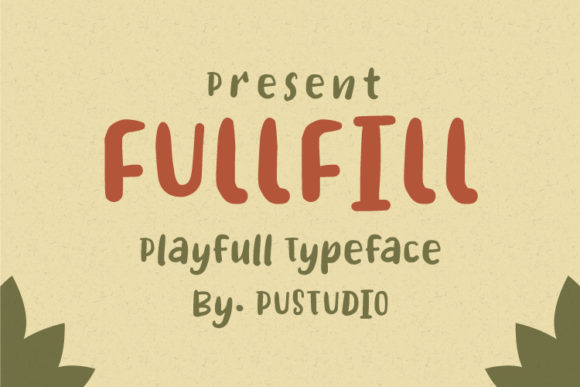
FullFill distinguishes itself through its playful and vintage styling. It avoids the stiff, rigid lines of traditional serif fonts and the cold neutrality of many modern grotesques. Instead, it features curves, flourishes, and a handcrafted feel that suggests warmth and approachability. This aesthetic is not merely decorative; it serves a functional role by evoking a sense of trust and nostalgia. When a viewer sees FullFill, they immediately associate the content with quality, creativity, and perhaps a hint of whimsy.
The font's structure allows it to stand out without sacrificing legibility. This balance is crucial. Many vintage-style fonts become unreadable when scaled down or used in complex layouts. FullFill, however, maintains clarity even in smaller sizes, making it versatile enough for everything from large billboards to intimate greeting cards.
The Psychology of Playful Typography
Why do we gravitate towards playful fonts? In marketing and design, typography is a silent communicator. It sets the emotional tone before a single word is read. A bold, geometric font might suggest innovation and technology, while a script font might imply elegance or luxury. FullFill, with its vintage roots, taps into the psychological concept of "warmth."
Studies in consumer behavior suggest that people are more likely to engage with brands that appear human and approachable. The slight irregularities and rounded edges in FullFill mimic handwriting, which creates a subconscious connection between the brand and the creator. It tells the audience, "This was made by a person, for a person." This is particularly effective in an era where automation and AI-generated content are becoming ubiquitous; a font with a human touch feels authentic.
Practical Applications Across Industries
The versatility of FullFill means it is not limited to a single niche. Its ability to adapt to different contexts makes it a favorite among designers who need a reliable tool for diverse projects. Let's explore how this font fits into real-world scenarios.
- Poster Designs and Event Marketing: The most common use for display fonts is in posters. Whether promoting a jazz festival, a community fair, or a book launch, FullFill provides the necessary impact. Its vintage style pairs exceptionally well with illustrations, watercolors, and grainy textures, creating a cohesive look that feels curated rather than generic.
- Book Covers: For authors, the cover is the first interaction a reader has with their work. FullFill is ideal for genres such as historical fiction, memoirs, children's books, and cozy mysteries. The font's nostalgic vibe can signal to the reader that the story within is timeless or deeply personal.
- Mercandise and Fashion Campaigns: In the world of streetwear and boutique fashion, branding is everything. T-shirts, tote bags, and hats often rely on typography to make a statement. FullFill adds a layer of sophistication to casual wear. When used in fashion campaigns, it can evoke a retro 70s or 80s aesthetic without looking dated, provided it is paired with modern imagery.
- Newsletters and Digital Content: While often associated with print, FullFill works wonders in email newsletters. Using it for subject lines or section headers can increase open rates by breaking up the monotony of standard web fonts. It draws the eye to key information, guiding the reader through the content.
- Greeting Cards and Album Covers: These are areas where emotion is paramount. A wedding invitation or a music album needs to convey a specific feeling immediately. FullFill's playful nature makes it perfect for celebrating milestones or expressing artistic flair. It turns a simple card into a keepsake.
Case Study: The Power of Context
Consider a local coffee shop rebranding its identity. If they choose a sleek, futuristic font, they might alienate customers looking for a cozy atmosphere. However, by using FullFill on their signage, menu boards, and cup sleeves, they instantly communicate a welcoming, artisanal vibe. The font becomes part of the customer experience, reinforcing the idea that the coffee is handmade and the environment is relaxed.
Bridging the Gap: Vintage Style in a Modern World
A common misconception about vintage fonts is that they are outdated or only suitable for retro-themed projects. This assumption limits their potential. In reality, mixing vintage elements with modern design principles is a hallmark of contemporary creativity. This technique, often called "retro-modern," combines the best of both worlds.
When using FullFill today, the key is balance. Pairing the ornate details of the font with clean, minimalist photography or stark white space can create a striking contrast. This juxtaposition prevents the design from looking cluttered or old-fashioned. Instead, it looks intentional and stylish.
In the realm of education and technology, FullFill offers a way to humanize interfaces. Imagine an educational app for children learning to read. Using a playful, vintage-inspired font like FullFill can make the learning process feel less like a chore and more like an adventure. Similarly, in tech startups, using FullFill for a logo can differentiate a brand in a sea of blue and white corporate logos, signaling that the company values creativity and individuality.
Best Practices for Using FullFill
To get the most out of FullFill, designers should follow a few guidelines to ensure the font enhances rather than detracts from the message.
- Respect Hierarchy: As a display font, FullFill should primarily be used for headlines, titles, and short phrases. Avoid using it for long paragraphs of body text, as the intricate details can cause eye strain during prolonged reading.
- Pairing Matters: Finding the right companion font is essential. Since FullFill is bold and expressive, pair it with a simple, neutral sans-serif for supporting text. This combination ensures that the full personality of FullFill shines through without competing with other elements.
- Color and Texture: Don't limit yourself to black text. FullFill looks stunning in rich colors, gradients, or textured fills. Experimenting with these elements can further emphasize the vintage aesthetic and add depth to the design.
- Know Your Audience: Always consider who will be viewing your design. If the target demographic is young and trend-conscious, FullFill can be a cool, ironic choice. If the audience is older or seeks tradition, it reinforces reliability and heritage.
Conclusion: Embracing Character in Design
In conclusion, FullFill is more than just a font; it is a tool for storytelling. Its playful and vintage style offers a refreshing alternative to the sterile uniformity of modern digital design. By understanding its strengths and applying it thoughtfully, creators can produce work that resonates on an emotional level.
From book covers that invite readers into new worlds to fashion campaigns that celebrate individuality, FullFill proves that typography has the power to transform. It reminds us that in a digital age, there is still immense value in the tactile, the warm, and the human. Whether you are a seasoned professional or a beginner exploring the world of design, incorporating FullFill into your workflow can add a layer of charm and authenticity that truly speaks to your audience.
As you embark on your next creative project, consider how a touch of vintage playfulness can elevate your vision. With FullFill, the possibilities are endless, and the results are sure to be memorable.