Valentine on Time: A Bold Display Font for Designs That Demand Attention
In the crowded landscape of digital and print design, typography serves as the primary vehicle for communication. While body text prioritizes legibility and flow, display fonts are tasked with a different objective: to arrest the eye and convey immediate character. Among the various options available to designers, Valentine on Time has emerged as a distinct choice for projects requiring a blend of assertiveness and structural integrity. This article explores what makes this typeface unique, how it fits into broader design categories, and when it should be selected over other alternatives.
Defining the Character of Valentine on Time
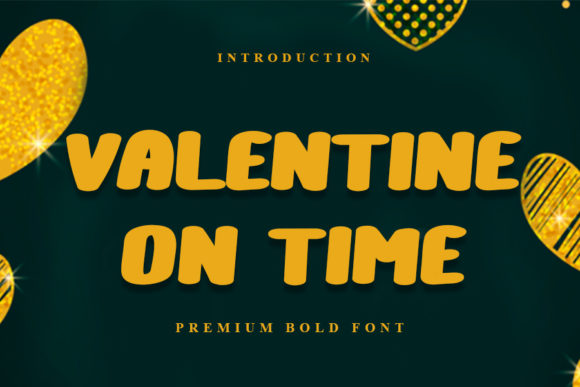
Valentine on Time is not merely a font; it is a statement piece defined by its simple yet assertive geometry. The typeface belongs to the display category, meaning it is optimized for large sizes where intricate details can be appreciated without sacrificing readability at scale. Its most defining characteristic is its thick lettering style. Unlike standard sans-serifs that often rely on subtle weight variations or delicate hairlines, Valentine on Time embraces substantial stroke widths.
This thickness gives the font a sense of permanence and stability. When you apply Valentine on Time to a poster, a logo, or a headline, the letters appear solid and grounded. The simplicity of its form strips away unnecessary ornamentation, allowing the boldness of the structure to take center stage. For professionals seeking a visual language that speaks with authority, this font offers a reliable foundation. It does not whisper; it declares.
The Psychology of Thick Lettering
The decision to use a thick, assertive font is often psychological. In marketing and branding, heavy weights are associated with reliability, strength, and confidence. Valentine on Time leverages this association effectively. By utilizing wide counters (the enclosed spaces within letters) and robust stems, the typeface creates a visual rhythm that feels balanced and deliberate. This is particularly effective in contexts where trust and clarity are paramount, such as in event signage, editorial headers, or product packaging that needs to stand out on a shelf.
Evaluating Fit: When to Choose Valentine on Time
Selecting the right typeface involves understanding the specific constraints and goals of a project. Valentine on Time excels in scenarios where impact is the primary metric. However, it is not a universal solution for every design challenge. Understanding its best-fit situations helps designers avoid common pitfalls.
- High-Impact Headlines: Because of its thick lettering, this font performs exceptionally well in headlines where the goal is to capture attention instantly. Whether for a music festival flyer or a corporate annual report cover, the assertive nature of the typeface ensures the message is not missed.
- Minimalist Branding: Paradoxically, a very bold font can support a minimalist aesthetic. The simplicity of the letterforms allows for clean layouts where the typography itself becomes the central graphic element, reducing the need for additional imagery or complex patterns.
- Short-Form Communication: Given its display classification, Valentine on Time is ideal for short bursts of text. It is perfect for slogans, call-to-action buttons, or section dividers where brevity meets boldness.
However, if a project requires extensive body copy or fine-grained detail work, relying solely on this font may result in a design that feels heavy and overwhelming. The thickness that provides power in headlines can reduce readability in dense paragraphs.
Comparative Analysis: Alternatives and Categories
When evaluating Valentine on Time, it is helpful to compare it against other typographic approaches. Designers often face a choice between geometric sans-serifs, humanist serifs, and slab serifs. Each category offers different advantages depending on the desired tone.
Valentine on Time vs. Geometric Sans-Serifs
Geometric sans-serif fonts, characterized by their reliance on circles and squares, offer a modern and clean look. While they share the "simple" trait with Valentine on Time, they often lack the sheer mass and assertiveness of the latter. Geometric fonts can sometimes feel too cold or clinical for certain emotional contexts. Valentine on Time bridges this gap by maintaining geometric precision while adding a layer of warmth and presence through its increased stroke weight. It feels more tactile than a standard geometric sans.
Valentine on Time vs. Slab Serifs
Slab serif fonts are another strong contender in the realm of bold, retro-inspired typefaces. They feature block-like serifs that add a vintage industrial feel. While slabs are excellent for creating a historical or rugged aesthetic, they introduce complexity through the addition of serifs. Valentine on Time remains sans-serif, offering a cleaner, more contemporary edge. If a designer wants the weight of a slab serif without the historical baggage, Valentine on Time provides a streamlined alternative that feels fresh rather than dated.
Tradeoffs and Limitations
No single font is perfect for every application. The primary tradeoff with Valentine on Time is versatility. Because of its distinctive thick lettering, it dominates a page. In a layout with multiple competing elements, using this font everywhere can lead to visual fatigue. It requires careful management of white space and hierarchy. Designers must ensure that the boldness of the font is supported by sufficient spacing and contrast from other elements in the composition.
Furthermore, at very small sizes, the thick strokes can cause ink trapping issues in print or pixelation in low-resolution digital displays. While the font is designed for display use, it is crucial to test it across various media before finalizing a project. For web applications, ensuring that the font renders correctly on mobile devices is essential, as the aggressive width of the characters may require adjustments to line lengths and container widths.
Practical Applications and Decision Factors
To make an informed decision about incorporating Valentine on Time into a workflow, consider the specific goals of your audience and the medium of delivery. For instance, in the fashion industry, where trends shift rapidly, a font like Valentine on Time can anchor a campaign with a timeless yet edgy vibe. Its assertive nature suggests confidence, which aligns well with brands targeting self-assured consumers.
In the tech sector, however, the approach might differ. Tech companies often favor lighter, more airy typefaces to suggest innovation and ease of use. Using Valentine on Time here would require a strategic pivot, perhaps limiting its use to emergency alerts or major product launch headlines where urgency and importance are key messages.
- Assess the Tone: Does your brand voice require a shout or a conversation? Valentine on Time is a shout.
- Consider the Hierarchy: Will this font be the star of the show, or does it need to play a supporting role? It is best suited as a lead actor.
- Test Readability: Always run tests on actual screens and printed proofs. The theoretical appeal of thick lettering must hold up under real-world viewing conditions.
Exploring Endless Possibilities
The true value of a display font lies in its ability to inspire creativity beyond standard usage. With Valentine on Time, designers can experiment with scale, color, and texture in ways that lighter fonts cannot easily support. The thick letterforms provide a substantial canvas for gradients, shadows, and overlapping effects. You might find yourself using the font not just for text, but as a structural element within an image, where the letters themselves become the background pattern.
Moreover, the simplicity of the design allows for easy integration with diverse artistic styles. Whether paired with hand-drawn illustrations, photography, or abstract shapes, the neutral yet strong base of Valentine on Time ensures that the typography complements rather than competes with the rest of the design. It acts as a solid anchor, allowing other creative elements to flourish around it.
Conclusion: Making the Right Choice
Selecting a typeface is a critical step in the design process, one that influences the perception of the entire project. Valentine on Time stands out as a powerful tool for designers looking to create work that is simple, assertive, and visually commanding. Its thick lettered appearance offers a distinct advantage in capturing attention and conveying strength.
While it may not replace the need for versatile body text fonts or delicate script typefaces, its role as a display specialist is undeniable. By understanding its strengths, acknowledging its limitations, and comparing it thoughtfully against other options, designers can leverage Valentine on Time to elevate their projects. Whether used for a bold logo, a striking poster, or a dynamic web header, this font provides the foundation for designs that truly inspire and endure.