Decoding Weast Hood: A Practical Guide for Bold Display Typography
In the crowded landscape of digital and print design, selecting the right typeface is often the difference between a project that resonates and one that fades into the background. Designers frequently face the challenge of balancing legibility with character, especially when working on high-impact visual communications. This is where Weast Hood enters the conversation as a distinct option for professionals seeking a font that commands attention without sacrificing aesthetic integrity. Defined by its bold weight and thick letterforms, this display font offers a unique blend of smooth curves and substantial presence.
Understanding whether a specific typeface fits your project requires more than just looking at a preview image. It involves evaluating how the font behaves in different contexts, how it interacts with other design elements, and what emotional tone it conveys to the audience. For adults aged 20 to 50 who are actively researching resources or evaluating tools for branding and editorial work, making an informed choice is critical. The following analysis breaks down the characteristics of Weast Hood, explores its practical applications, and compares its utility against broader typographic categories to help you decide if it belongs in your toolkit.
The Anatomy of a Bold Statement
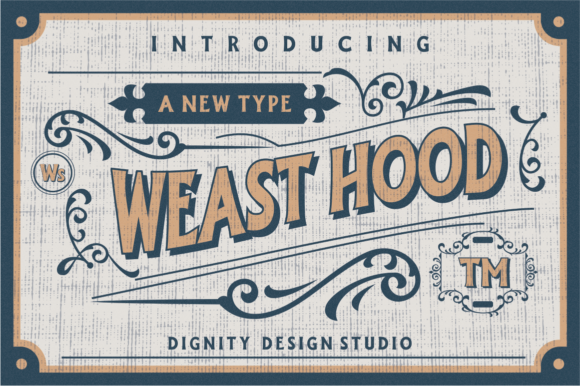
At its core, Weast Hood is categorized as a display font, a classification reserved for typefaces designed to be used at large sizes rather than for body text. Its defining feature is its thickness; the strokes are heavy and confident, creating a visual weight that demands immediate engagement. However, what sets it apart from many other "bold" fonts is the treatment of its curves. While some thick fonts can appear blocky, rigid, or even harsh, Weast Hood is characterized by smooth, flowing contours.
This combination of mass and fluidity creates a sophisticated tension. The thick lettering provides stability and authority, while the smooth curves introduce a sense of modern elegance and approachability. In the world of typography, these two elements often compete, but in Weast Hood, they complement each other. This balance makes the font particularly versatile for projects that need to feel both powerful and refined. When applied correctly, the font does not shout; rather, it asserts itself with a quiet confidence that suggests quality and intentionality.
Visual Impact and Readability
One of the primary considerations when choosing a display font is how it reads at scale. Because Weast Hood relies on thick strokes, it maintains excellent visibility even when viewed from a distance or on smaller mobile screens where pixel density might otherwise degrade thin lines. The internal spacing (counter space) within the letters is generally generous enough to prevent the text from feeling cramped, ensuring that the characters remain distinct.
However, the very features that make it striking also dictate its limitations. The bold nature of the typeface means it is rarely suitable for long-form content such as article bodies or dense technical documentation. In those scenarios, the visual weight would overwhelm the reader and cause eye fatigue. Instead, Weast Hood excels in short bursts of communication: headlines, subheadings, logos, and poster copy. Its strength lies in its ability to anchor a layout and guide the viewer's eye to the most important information immediately.
Evaluating Fit: Where Weast Hood Shines
To determine if Weast Hood is the right tool for your next project, it is helpful to look at specific industries and use cases where its attributes align perfectly with brand goals. The font's description as being perfect for fashion branding is well-founded, but its utility extends further into various creative sectors.
- Fashion and Lifestyle Branding: In the fashion industry, typography often serves as a visual shorthand for the brand's identity. Weast Hood's smooth curves convey a sense of luxury and movement, which pairs exceptionally well with imagery of clothing, accessories, or lifestyle products. The boldness ensures the brand name stands out on social media thumbnails, magazine covers, and storefront signage.
- Editorial and Magazine Design: High-end editorial layouts often rely on dramatic contrast between serif body text and sans-serif display headers. Weast Hood can serve as a powerful alternative to traditional geometric sans-serifs. Its organic curves add a human touch that prevents the layout from feeling too sterile or corporate, making it ideal for feature stories, fashion spreads, and cultural commentary.
- Packaging and Product Labels: For consumer goods, shelf appeal is paramount. A thick, distinctive font helps a product cut through visual noise on a crowded shelf. Weast Hood's unique shape allows for memorable packaging designs that feel contemporary yet established.
When adding this font confidently to your projects, the results often speak for themselves. It transforms standard layouts into dynamic compositions. However, success depends on pairing it correctly. Using Weast Hood alone can result in a monotonous experience. It thrives when juxtaposed with lighter, cleaner typefaces that provide breathing room and context.
Comparative Analysis: Alternatives and Tradeoffs
No single font is universally superior. When designers evaluate Weast Hood, they are often comparing it against other bold display options available in the market. These alternatives generally fall into a few categories: geometric sans-serifs, humanist serifs, and slab serifs. Understanding the tradeoffs between Weast Hood and these groups helps clarify its specific niche.
Geometric Sans-Serif Alternatives: Many designers reach for geometric fonts like Futura or Avant Garde for their clean, mathematical precision. While these fonts offer a similar level of boldness, they lack the organic softness of Weast Hood. If a project requires a futuristic, industrial, or strictly minimalist look, a geometric font might be the better choice. Weast Hood, with its smoother curves, brings a warmer, more artistic vibe that feels less rigid and more expressive.
Humanist Serif Options: On the other end of the spectrum, humanist serifs offer elegance and readability. They are excellent for conveying tradition and trustworthiness. However, they may not provide the same immediate graphic impact as a thick display font. Weast Hood bridges the gap by offering the visual punch of a display font with the fluidity of a humanist style, though it lacks the decorative terminals of a traditional serif.
Slab Serifs: Slab serifs are known for their heavy, block-like feet and strong presence. They are great for vintage or industrial aesthetics. The tradeoff here is texture. Slab serifs often have sharp corners and hard edges. Weast Hood avoids this hardness entirely. If your project needs to feel aggressive or rugged, a slab serif might be preferable. If the goal is to feel sleek, modern, and polished, Weast Hood is likely the stronger contender.
Decision Factors for Selection
Choosing between Weast Hood and other options should come down to the specific emotional response you want to evoke. Consider the following factors before committing:
- Tone of Voice: Does the brand need to sound authoritative and loud, or sophisticated and inviting? Weast Hood leans toward the latter while maintaining authority.
- Contextual Environment: Will the font be used on a dark background, a light background, or over complex imagery? The thick strokes of Weast Hood perform well across various backgrounds, but ensure there is sufficient contrast to maintain clarity.
- Longevity vs. Trendiness: Some bold fonts are highly trendy and may date quickly. Weast Hood's classic curve-based structure gives it a timeless quality that can sustain a brand identity over several years without feeling outdated.
Navigating Limitations and Best Practices
While Weast Hood is a robust tool, it is not a cure-all for every design problem. One significant limitation is its lack of versatility in multi-weight systems. Unlike variable fonts that allow for subtle shifts in weight to create hierarchy, Weast Hood is typically defined by its singular, bold presentation. This means designers must rely on size, color, and placement to create visual interest rather than weight variations.
Furthermore, because the font is so visually dominant, it leaves little room for error in kerning and tracking. Tight spacing can cause the thick letters to merge into an illegible blob, while excessive spacing can break the flow of the curves. Careful attention to detail is required to ensure the smooth lines remain distinct and harmonious.
For readers exploring alternatives, it is worth noting that if your project requires a wide range of weights (light, regular, bold, black) or specialized character sets for multilingual support, you might need to look beyond a dedicated display font like Weast Hood. In such cases, a comprehensive family with multiple masters might be a more practical resource. However, for focused, high-impact applications where a single, strong voice is needed, Weast Hood remains a top-tier choice.
Making the Final Choice
Selecting a typeface is an exercise in strategic decision-making. It requires weighing the visual strengths of a font against the functional needs of the project. Weast Hood offers a compelling proposition for designers working in fashion, editorial, and branding spaces who need a font that combines boldness with grace. Its smooth curves and thick lettering provide a unique aesthetic that stands out in a sea of generic sans-serifs.
If your goal is to create a design that feels confident, modern, and polished, adding Weast Hood to your project is a logical step. It invites the user to engage with the content immediately while maintaining a sense of refinement. By understanding its strengths, acknowledging its limitations, and comparing it thoughtfully against other typographic styles, you can make an informed decision that elevates your work. Ultimately, the right font is the one that communicates your message most effectively, and for many bold, creative endeavors, Weast Hood delivers exactly that.