The Power of Imperfection: Why Already Broken is the Definitive Voice for Modern Disruption
In an era where digital interfaces are increasingly homogenized by sleek, minimalist templates and algorithmic uniformity, a new wave of visual rebellion is emerging. Designers and brand strategists are moving away from the sterile perfection of standard sans-serifs and serif fonts, seeking instead a typeface that communicates raw energy, urgency, and authenticity. Enter Already Broken, a rebellious and dramatic display font that has quickly become a cornerstone for creators looking to break the mold.
This is not merely a stylistic choice; it is a strategic response to a market saturated with "perfect" content. As we navigate a landscape where attention spans are shrinking and consumer skepticism is rising, brands need a visual language that cuts through the noise. This article explores why Already Broken is capturing the imagination of professionals, entrepreneurs, and marketers alike, and how its unique aesthetic aligns with broader shifts in technology, lifestyle, and creative workflows.
Defining the Aesthetic: More Than Just a Typeface
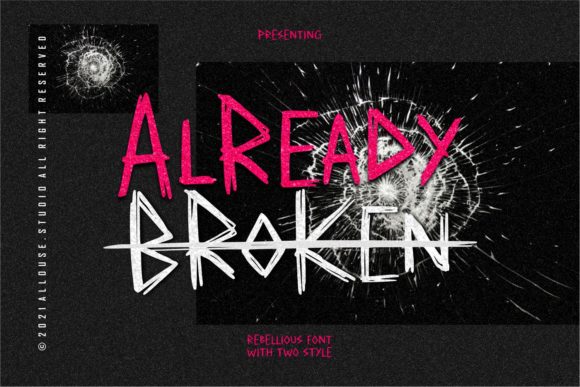
To understand the impact of Already Broken, one must first look at what it represents beyond its glyph shapes. It is a rebellious and dramatic display font designed to evoke a sense of chaos, deconstruction, and unfiltered expression. Unlike traditional typography that strives for legibility above all else, this font prioritizes emotional resonance and visual impact.
The character set features jagged edges, irregular spacing, and a distressed texture that mimics the physical act of tearing, cracking, or graffitiing a surface. When you use Already Broken in your designs, you are not just selecting a font; you are injecting a narrative of resistance into your project. It challenges the viewer to stop scrolling and start reading because the text itself refuses to be ignored.
For the modern creator, this font serves as a tool to visualize concepts that are difficult to articulate through standard design languages. Whether it is a music festival poster, a streetwear brand launch, or a commentary on social unrest, Already Broken provides the visual vocabulary to express these themes with immediate clarity and intensity.
The Shift Toward Authenticity in Branding
The rise of Already Broken is not an isolated incident but rather a symptom of a larger cultural shift toward authenticity. In recent years, consumers have grown weary of polished, airbrushed marketing campaigns that feel disconnected from reality. There is a growing demand for transparency, grit, and human imperfection in the brands they support.
- Anti-Perfectionism: Audiences are gravitating toward brands that admit their flaws. A font that looks "broken" signals honesty and vulnerability, traits that build deeper trust with Gen Z and Millennial demographics.
- Emotional Connection: Standard fonts often fail to evoke strong emotions. Already Broken triggers an instinctual reaction, creating an immediate emotional hook that can drive engagement and conversion.
- Narrative Depth: Every crack and tear in the letterforms tells a story. This allows designers to embed subtext directly into the visual hierarchy without needing additional copy.
Entrepreneurs and freelancers are increasingly recognizing that their visual identity must reflect their values. If a business prides itself on being disruptive, innovative, or edgy, using a conservative, safe font creates cognitive dissonance. By adopting Already Broken, these professionals ensure their visual output matches their internal mission.
Applications in Creative Industries
The versatility of this dramatic display font extends across various sectors. In the world of music and entertainment, it has become a staple for album covers and tour posters, perfectly capturing the high-energy atmosphere of rock, punk, and electronic genres. The font's aggressive nature mirrors the sonic intensity of the music it accompanies.
Similarly, in the realm of streetwear and fashion, Already Broken resonates with the DIY ethos of urban culture. Brands utilizing this typeface often position themselves as exclusive yet accessible, appealing to a demographic that values individuality over mass-market appeal. The font allows for dynamic layouts where text becomes an image in itself, breaking the grid and challenging conventional composition rules.
Even in digital marketing and web design, the application of Already Broken is gaining traction. While full-body paragraphs remain unreadable in such styles, the font excels in headlines, call-to-action buttons, and hero sections. It draws the eye immediately, increasing click-through rates for campaigns targeting audiences who crave excitement and novelty.
Workflow Adaptations and Design Flexibility
For professional designers and agencies, integrating Already Broken requires a shift in workflow. Because the font is inherently chaotic, it demands a higher level of control over kerning, tracking, and layout balance. However, this constraint fosters creativity. Designers are forced to think more critically about negative space and visual weight, leading to more sophisticated compositions.
The font's ability to be manipulated is another key factor in its popularity. It works exceptionally well when combined with other design elements such as halftone patterns, glitch effects, or bold color blocking. This synergy allows for endless possibilities, as noted by industry experts who encourage users to explore its endless possibilities within their projects.
- Layering Techniques: Combine Already Broken with clean, geometric sans-serifs to create a striking contrast between order and chaos.
- Color Psychology: Use high-contrast colors like neon green against black or electric blue against white to amplify the dramatic effect of the font.
- Motion Graphics: Animate the broken edges of the letters to simulate movement, vibration, or decay, adding a temporal dimension to static designs.
These techniques demonstrate that Already Broken is not just a static asset but a dynamic component of a modern design system. It adapts to the needs of the medium, whether it is print, screen, or motion.
Connecting to Broader Technological Trends
The relevance of Already Broken also intersects with developments in artificial intelligence and generative design. As AI tools begin to generate vast amounts of content, there is a counter-movement emphasizing human-made imperfections. The "broken" aesthetic serves as a badge of human authorship, distinguishing work created by people from content generated by algorithms.
Furthermore, the trend towards "brutalism" in web design has paved the way for fonts like Already Broken. Web brutalism rejects the smooth curves and soft shadows of modern UI design in favor of raw, unadorned structures. This style appeals to tech-savvy users who appreciate functionality and directness over decorative fluff. By incorporating Already Broken, designers align their work with this forward-looking technological philosophy.
Moreover, the font addresses the changing expectations of the mobile-first user. On small screens, complex details can get lost, but the bold, heavy strokes of a dramatic display font remain legible and impactful. This ensures that the message is delivered effectively regardless of the device used to view it.
Practical Observations for Marketers
Marketers observing the success of brands using Already Broken note a distinct increase in shareability. Content that looks different from the feed is more likely to be stopped, viewed, and shared. In a crowded marketplace, standing out is not optional; it is essential. The font provides a quick and effective method to differentiate a campaign from competitors who rely on generic stock imagery and standard typography.
However, caution is advised. The power of Already Broken lies in its specificity. Overusing it can dilute its impact and make a brand appear messy rather than intentional. The key is to use it strategically as a focal point. For example, using the font for a single headline on a landing page while keeping the rest of the interface clean can create a powerful anchor that guides the user's attention.
The Future of Visual Communication
As we look toward the future of design and communication, the lines between digital and physical will continue to blur. Already Broken bridges this gap by bringing the tactile feel of physical damage into the digital realm. It reminds us that even in a virtual world, our experiences are grounded in reality, complete with friction, resistance, and imperfection.
For professionals, enthusiasts, and creators, the adoption of this font is a statement of intent. It declares a willingness to take risks, to challenge norms, and to embrace the unconventional. As the digital landscape evolves, the need for fonts that can convey complex emotions and narratives will only grow. Already Broken stands ready to meet this demand, offering a rebellious and dramatic voice for those who dare to speak up.
In conclusion, the journey of Already Broken from a niche typographic experiment to a mainstream design staple illustrates the evolving tastes of the creative community. It proves that there is still room for drama, disruption, and raw expression in a world obsessed with efficiency. By understanding and utilizing this font, designers can create work that not only looks stunning but also feels significant. The possibilities are indeed endless, waiting for the next generation of creators to explore them.
Whether you are launching a startup, designing a concert poster, or rebranding a legacy company, consider the power of the imperfect. Let Already Broken be the catalyst for your next big idea, and watch as your designs transform from mere information into unforgettable experiences.