Tronthon: A Strategic Choice for Personalized Display Design
In the landscape of digital typography, finding a typeface that balances distinct personality with professional reliability is often a challenging endeavor. Many designers struggle to find fonts that offer enough character to stand out without veering into the realm of illegibility or dated novelty. Tronthon emerges as a compelling solution in this specific niche. It is not merely another brush style display font; it is a tool designed for projects that demand a personalized look while maintaining structural integrity.
For professionals ranging from freelance marketers to small business owners, the choice of typography can make or break a visual hierarchy. Tronthon offers a unique aesthetic that mimics the fluidity of hand-painted strokes but delivers the consistency required for modern production workflows. This evaluation explores how this font functions in real-world scenarios, its strengths and limitations, and whether it aligns with the needs of serious creators and entrepreneurs.
Understanding the Core Characteristics
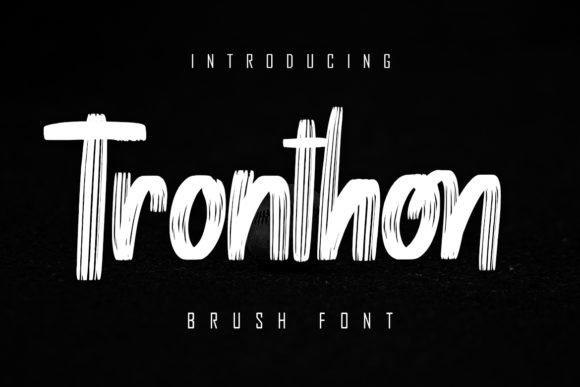
The primary appeal of Tronthon lies in its execution as a brush style display font. Unlike rigid sans-serifs or traditional serifs, Tronthon captures the organic imperfections of a brushstroke. The letterforms feature variable stroke widths, tapered edges, and a sense of motion that suggests human intervention. This characteristic makes it particularly effective for headlines, logos, and packaging where a "crafted" feel is essential.
However, what distinguishes Tronthon from other decorative fonts is its attention to legibility. Many brush fonts suffer from inconsistent spacing or overly aggressive flourishes that compromise readability at smaller sizes. Tronthon appears to mitigate these issues by maintaining a robust x-height and clear counter shapes. This balance allows the font to function effectively across various media, from large-format signage to mobile-optimized web headers.
- Organic Texture: The font simulates the texture of ink on paper, adding depth without requiring complex graphic overlays.
- Display Focus: It is optimized for short text elements rather than body copy, ensuring that the personality shines through without overwhelming the reader.
- Consistent Weight: Despite the variation in stroke width, the overall weight remains balanced, preventing visual fatigue in design compositions.
Practical Applications in Professional Workflows
The utility of Tronthon extends beyond simple decoration. For entrepreneurs and brand managers, establishing a unique visual identity is critical. Using a standard system font like Arial or Helvetica can make a brand appear generic. In contrast, incorporating Tronthon into a logo or campaign headline immediately signals creativity and attention to detail.
Consider the scenario of a boutique coffee shop launching a new product line. A label featuring Tronthon can convey an artisanal quality that resonates with consumers looking for authenticity. Similarly, for freelancers creating portfolios or personal branding materials, this font offers a way to differentiate their work from the sea of corporate-standard designs. It provides a level of customization that feels intentional rather than accidental.
In the realm of digital marketing, the effectiveness of a font is often measured by its ability to capture attention quickly. Tronthon's dynamic structure draws the eye naturally. When used for social media graphics, email subject lines, or landing page hero sections, it can significantly improve click-through rates by breaking the monotony of standard layouts. However, success depends on proper implementation. The font should be paired with simpler, neutral typefaces for supporting text to ensure the overall design remains cohesive.
Integration Across Media Types
One of the practical advantages of Tronthon is its versatility across different output formats. Whether the project involves print collateral, such as business cards or brochures, or digital assets like website banners and app interfaces, the font maintains its visual impact. High-resolution rendering ensures that the brush-like details remain crisp, which is vital for print applications where clarity is paramount.
For educators and publishers, Tronthon can serve as an engaging tool for creating visually stimulating learning materials. While body text requires high legibility, using Tronthon for chapter headings or key concept highlights can help organize information in a way that is both aesthetically pleasing and cognitively accessible. The font acts as a visual cue, guiding the reader's focus without disrupting the flow of information.
Evaluating Usability and Reliability
When selecting a typeface for long-term use, reliability is a key factor. A font that looks good in isolation may fail when subjected to the rigors of actual production. Tronthon demonstrates a level of technical stability that supports professional standards. The kerning pairs are generally well-adjusted, reducing the need for manual tweaking during the layout process. This efficiency is crucial for freelancers and agencies working under tight deadlines.
Furthermore, the flexibility of the font allows for creative experimentation. Designers can adjust tracking, leading, and scale to achieve different moods. Tightening the spacing can create a bold, impactful statement, while loosening it can introduce a sense of elegance and airiness. This adaptability means that Tronthon can fit into diverse brand guidelines, provided the context is appropriate.
It is important to note that no single font is a universal solution. Tronthon is specifically a display font. Attempting to use it for paragraphs of text will likely result in poor readability and a cluttered appearance. Professional users must exercise discipline in their typographic choices, reserving Tronthon for titles, subheads, and emphasis points. This restraint enhances the font's impact rather than diminishing it.
Target Audience and Strategic Fit
The ideal user for Tronthon includes individuals who value aesthetics but require functional results. Small business owners looking to elevate their brand image will find significant value in this asset. By adopting a font that implies craftsmanship, they can communicate quality to their customers without increasing production costs.
Creatives and content creators also benefit from the personalized look Tronthon provides. Bloggers and publishers seeking to distinguish their editorial voice can use the font to create a signature style. For example, a lifestyle blog might use Tronthon for feature post titles, instantly setting a tone that is warm, inviting, and personal.
Marketers and advertisers can leverage the font's emotional resonance. In campaigns targeting audiences who appreciate handmade goods, vintage aesthetics, or authentic experiences, Tronthon serves as a visual shorthand for those values. It bridges the gap between digital precision and analog charm, making it a strategic choice for brands aiming to connect on a human level.
Potential Limitations to Consider
While Tronthon offers many advantages, it is not without constraints. Its strong stylistic presence means it can easily clash with other decorative elements. If a design already features complex patterns or multiple typefaces, adding Tronthon may result in visual chaos. Additionally, because it is a display font, it may not support the full range of languages or special characters required for international projects. Users should verify the character set before committing to a global rollout.
Another consideration is accessibility. The brush style nature of the letters can sometimes reduce legibility for individuals with visual impairments or dyslexia. When designing for inclusive audiences, it is advisable to pair Tronthon with highly readable sans-serif fonts and ensure sufficient color contrast. Balancing style with accessibility is a hallmark of professional design, and ignoring this principle can undermine the effectiveness of the entire project.
Conclusion on Value and Implementation
Ultimately, Tronthon represents a valuable addition to any toolkit focused on display typography. It succeeds by offering a personalized look that feels authentic and crafted, addressing the common need for uniqueness in a saturated market. Its strength lies in its ability to convey emotion and character while maintaining the structural qualities necessary for professional application.
For those willing to apply it with care and strategic intent, Tronthon can transform ordinary designs into memorable experiences. Whether used for a startup logo, a seasonal marketing campaign, or a personal portfolio, the font adds a layer of sophistication that elevates the perceived value of the work. By understanding its capabilities and respecting its limitations, designers and business owners can harness the full potential of Tronthon to achieve their communication goals effectively.
The decision to adopt Tronthon should be driven by the specific needs of the project. If the goal is to inject personality, evoke a sense of history, or highlight a creative edge, this font is a robust candidate. However, if the priority is maximum neutrality or data-heavy presentation, other options may be more suitable. In the right context, however, Tronthon proves itself to be a reliable, versatile, and aesthetically pleasing resource for the modern creator.